
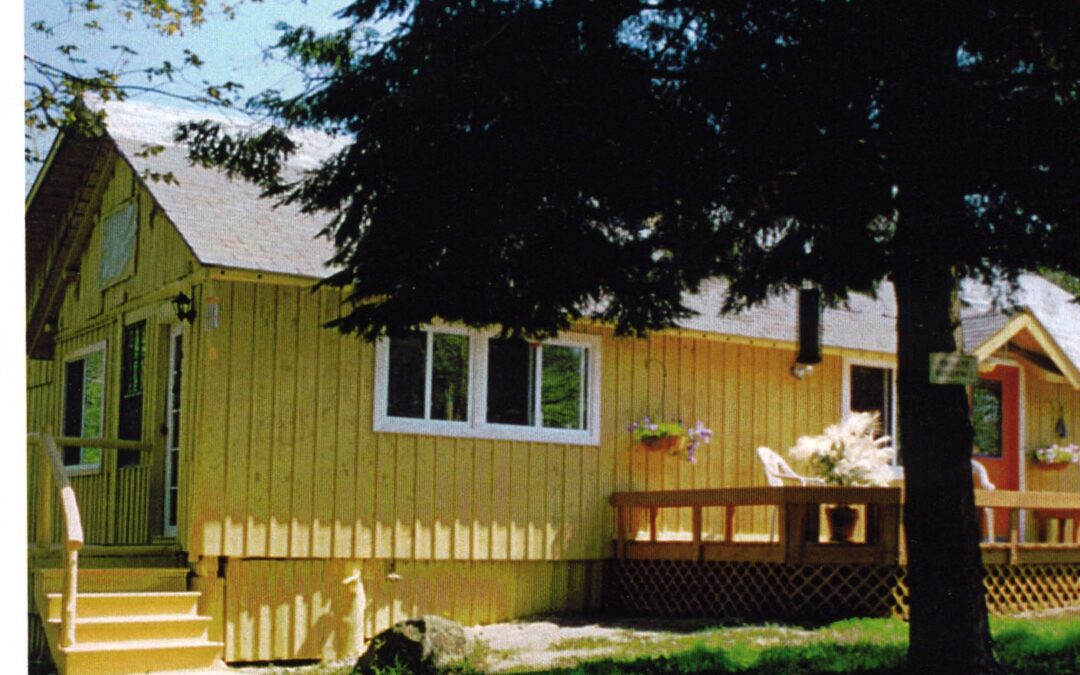
Whoever would have plotted and planned to build four more?
We actually built six in the end, though looking back, it seems almost impossible that we’ve racked up that many dwellings.
The land itself was initially no problem. It was family land, considered useless by the Finn woodsman once the lumber had been cut from it.
Who could have known that a hundred years later, when the deciduous forest had sketched itself back in among the remaining conifers, lining the rocky outcroppings above crystal-clear lake water, the value of this place would become immeasurable?
Who could have imagined that forty-five minutes outside a city, small though it was, people would choose to live year-round in what had once been summer cabins?
And beyond that, who would have dreamed that doctors and lawyers and bankers would exploit nearly nonexistent shorefront regulations to plant their three-story mini-mansions right at the water’s edge?
At least we respected the landscape. At least we connected with the spirits of the place.
Chris took his Husqvarna and set out on foot to fell fifty giant hemlock trees, dropping them into whatever spaces he could find.
We limbed and peeled them with peeling spuds, propped them up on chunks of logs, and left them to dry and cure.
That’s when we found the man with the mobile sawmill. We called another man down the road who owned a skidder, and he hauled the trees up to where they could be milled right there on the property.
Another year of curing the lumber on site, and it was ready to be hauled down to the place where we would build the cabin.
There was something wonderfully contradictory about it all. We were moving full speed ahead, yet the materials themselves dictated the pace. Cutting, peeling, hauling, stacking, waiting. We had been building that cabin for years before the first wall ever went up.
In the end, it was worth it.
We had walls and flooring and roofing cut from trees many considered junk lumber.
But it was beautiful to us.