
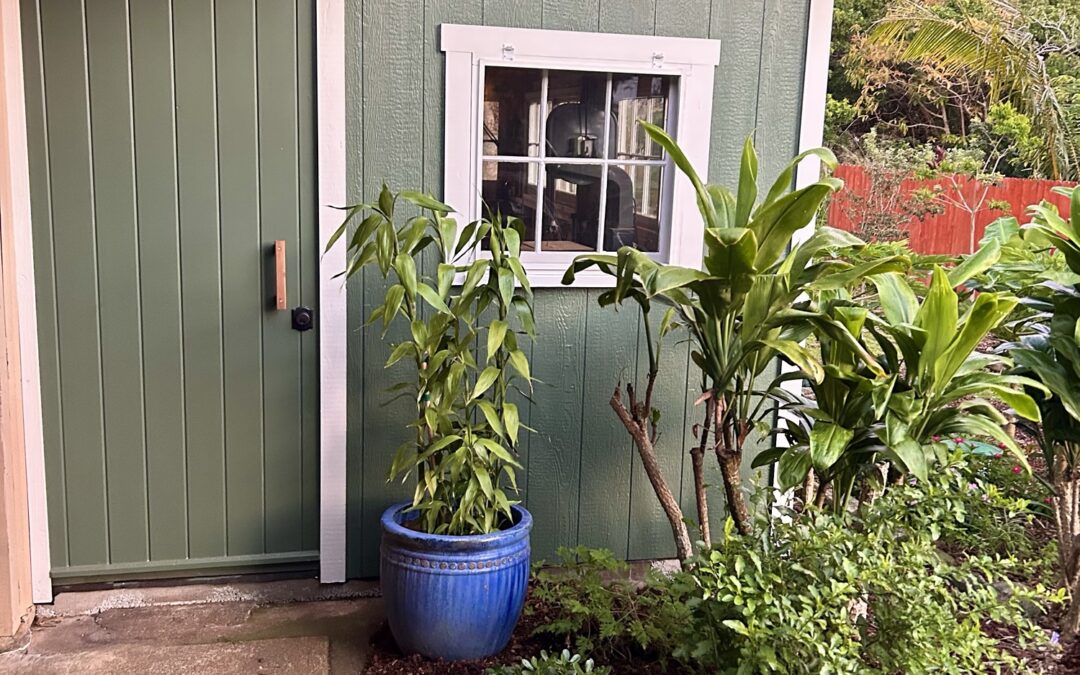
If you could, with X-ray vision, see beneath the layers,
under the new paint and trim –
a green as bright as eucalyptus buds,
a white like sun-bleached beach stones—
you would find what we have:
the old rot,
termite-eaten boards
of a 1930s plantation house,
wrapped in a collage of siding,
a carpenter’s leftovers,
likely meant to keep
renovation costs down.
All of it now
sheathed in new cladding,
textured to mimic real wood,
yet built to last,
impervious
to termites’ teeth
and, if cared for,
to the mold and rot
endemic to Hawaiʻi Island.
Appearances mislead.
But sometimes
that is exactly
what we hope for.