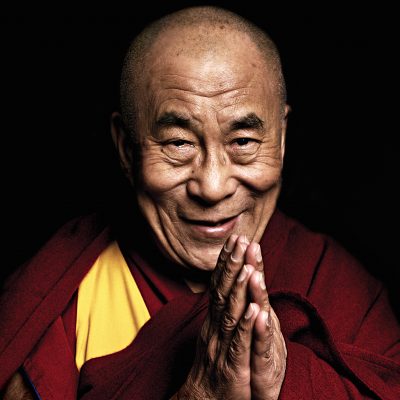
| THICH NHAT HANH answers a retreatant’s question on what to do in the face of suffering.
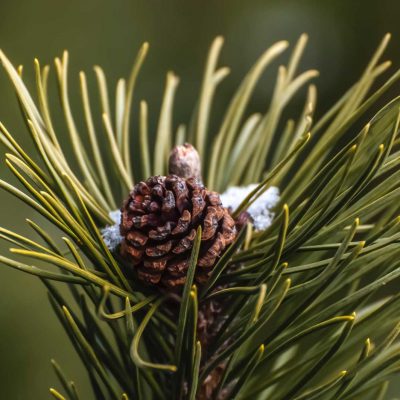
Dear Thay, I suffer a lot and I know that suffering is part of my practice. My suffering comes from two main things. One is that I have a chronic illness, which causes me a lot of physical pain. The other is that I am an activist and I care very deeply for the world. Sometimes I feel a lot of despair about what’s happening in the world around us, in terms of violence, poverty, and environmental destruction. What practices would you recommend for those of us who are living with physical pain or are in despair about the suffering of the world? Thich Nhat Hanh: As activists we want to do something to help the world to suffer less. But we know that when we’re not peaceful, when we don’t have enough compassion in us, we can’t do much to help the world. We ourselves are at the center. We have to make peace and reduce the suffering in ourselves first, because we represent the world. Peace, love, and happiness must always begin here, with ourselves. There is suffering, fear, and anger inside of us, and when we take care of it, we are taking care of the world. Imagine a pine tree standing in the yard. If that pine tree were to ask us what it should do, what the maximum is a pine tree can do to help the world, our answer would be very clear: “You should be a beautiful, healthy pine tree. You help the world by being your best.” That is true for humans also. The basic thing we can do to help the world is to be healthy, solid, loving, and gentle to ourselves. Then when people look at us, they will gain confidence. They will say, “If she can do that, I can do that too!” So anything you do for yourself, you do for the world. Don’t think that you and the world are two separate things. When you breathe in mindfully and gently, when you feel the wonder of being alive, remember that you’re also doing this for the world. Practicing with that kind of insight, you will succeed in helping the world. You don’t even have to wait until tomorrow. You can do it right now, today. The Buddha proposed so many ways to practice to reduce the pain in your body and in your emotions, and to reconcile with yourself. We have learned in this retreat that you can reduce physical pain through the practice of releasing tension in the body. Pain increases as a function of tension, and it can be reduced if we release the tension. You can practice relaxation in the lying or sitting position. You can also practice relaxation when you walk, and with every step you can help release the tension. Walk like a free person. Put things down, don’t carry anything, and feel light. There is a burden we always carry with us. The skill we need is how to lay down our burden in order to be light. If you sit, walk, or lie down like that, it’s very easy to release the tension and reduce the pain. The Buddha said that you shouldn’t amplify your pain by exaggerating the situation. He used the image of someone who has just been hit by an arrow. A few minutes later, a second arrow strikes him in exactly the same spot. When the second arrow hits, the pain is not just doubled; it is many times more painful and intense. So when you experience pain, whether it’s physical or mental, you have to recognize it just as it is and not exaggerate it. You can say to yourself, “Breathing in, I know this is only a minor physical pain. I can very well make friends and peace with it. I can still smile to it.” If you recognize the pain as it is and don’t exaggerate it, then you can make peace with it, and you won’t suffer as much. But if you get angry and revolt against it, if you worry too much and imagine that you’re going to die very quickly, then the pain will be multiplied one hundred times. That is the second arrow, the extra suffering that comes from exaggeration. You should not allow it to arise. This is very important. It was recommended by the Buddha: Don’t exaggerate and amplify the pain. ~ Published in Shambhala Sun, November 2011
|
On Suffering and Compassion
The Heart of Compassion
Typically I eschew today’s news. As far as I’m concerned, good journalism died a long time ago, and the opinionated drivel that clogs the arteries of society is not worth my time and attention. We do however subscribe to a daily paper, just in case there is something major of which we need to be aware. Other than that, it’s Bizarro and Annie’s Mailbox which pretty much take me through my morning papaya. I always find it intriguing to discover what others deem critical enough to share on a national forum, and today it concerned a gal so repelled by her obese father that she just had to ask for help in managing her irritation. Annie’s response was that “Dad already feels worthless, so instead of anger and disgust, try compassion.” That got me going.
The term compassion gets tossed around a lot these days, with less regard than the word sympathy. To my mind, any of us can feel empathy or sympathy for another going through a tough time. Compassion, however, is a horse of a different color. Compassion itself has come to the fore largely due to the life work of such noble beings as the spiritual leader Tenzin Gyatso, more commonly known as Tibet’s 14th Dalai Lama. Even the Tibetans don’t toss the concept around lightly – they encourage a lifetime practice of sitting with ourselves in mindful meditation so that we might touch, among other things, the heart of genuine compassion.
You can understand how something this demanding differs from a sentiment like sympathy. Even Webster’s definition is dilute in its effort to express the depth of this character trait as the sympathetic consciousness of another’s distress together with a desire to alleviate it. Yet it becomes clear even then that this is simply not something we learn overnight. Sympathy or empathy are feelings that naturally arise when we observe another’s pain and can identify with it. Compassion derives from a committed inner practice and awareness of the pervasive nature of suffering itself. It is not a quality that can be elicited or forced before its time, much like the aging of a fine wine.
In typical Western fashion, many strive to attain overnight what Tibetan monks and nuns have achieved over a lifetime of dedicated service, having entered the monastic life as very small children. There’s nothing wrong with a desire to better ourselves, only let’s be realistic about what it takes to plumb the depths of our true being: a moment to moment awareness of our thoughts and intentions. Forgiveness of ourselves and others develops over time, where we discover what lies beyond inner walls of self hatred and blame.
Forgiveness itself may well be key, as most have someone or something hanging in that balance, and absolving ourselves can prove the most humbling of all. As we strive to bear no malice toward others – and this is not something we can simply say and it becomes so – we discover in the process that, in being sentient, we suffer. Awareness of this noble truth arises in an open heart. We begin to understand the lonely twisting pain of those who have wronged us – those who are not yet able to forgive others who have crushed their spirit and have little hope of exculpating themselves. And so in their ignorance, they pass it on. It is with an equal yet opposing force of determination that we may choose to commit ourselves to a path of peace, diligently cultivating the tenderness required for a compassionate existence. As Sogyal Rinpoche offers, “Compassion is not true compassion unless it is active.”